A car park lighting service log is the only real proof a strata council has that the electrician did the job. Plenty of councils glance at an invoice reading “lighting maintenance completed” and move on. That habit tends to bite later, usually as a dark stairwell, a trip claim or an insurer asking awkward questions.
Good commercial electric service leaves a paper trail that a council member with no electrical background can read and follow. If the paperwork can’t do that, the work behind it deserves a closer look.
What Is a Car Park Lighting Service Log?
A car park lighting service log is a dated record of every inspection, test, fault and repair on car park lighting. In a strata scheme, that means lighting on common property. It sits alongside the invoice and tells the council what was found and what’s still outstanding. It works much like a vehicle logbook, only for the building’s lights.
The better versions also cover the control gear behind the fittings. Photoelectric cells (PE cells) are light sensors that switch lights on at dusk and off at dawn. A log that skips that gear leaves out the parts most likely to fail expensively.
Why WA Strata Councils Need the Detail
WA strata councils need detailed lighting records because the Strata Titles Act 1985 makes the strata company responsible for common property. Section 91 requires it to keep common property, including fixtures and fittings, in good and serviceable repair. It also has to properly maintain them and renew or replace them when needed.
Car park lighting sits squarely inside that duty.
The log is how a council shows it actually met the obligation. When a resident trips on a poorly lit ramp, the first question from an insurer is simple. When were the lights last checked, and what did the electrician find? A council holding twelve months of dated reports is in a far stronger position than one holding a pile of invoices.
Every Fitting Should Be Checked and Identified
A proper service log identifies each light fitting by location and records its condition on the day of the visit. Vague entries like “replaced several lights, level B1” tell the council nothing and make warranty claims close to impossible. Experienced contractors number every fitting on a simple site plan and use those numbers at every visit.
Lux readings are where careful operators separate themselves from the rest. A handheld lux meter reading at a few fixed points (ramp, pedestrian path, lift lobby) shows gradual decline before anyone complains. Open and outdoor car parks are generally designed around the lighting categories in AS/NZS 1158.3.1, so readings give the council something to measure against.
Testing the Switching Gear Behind the Lights
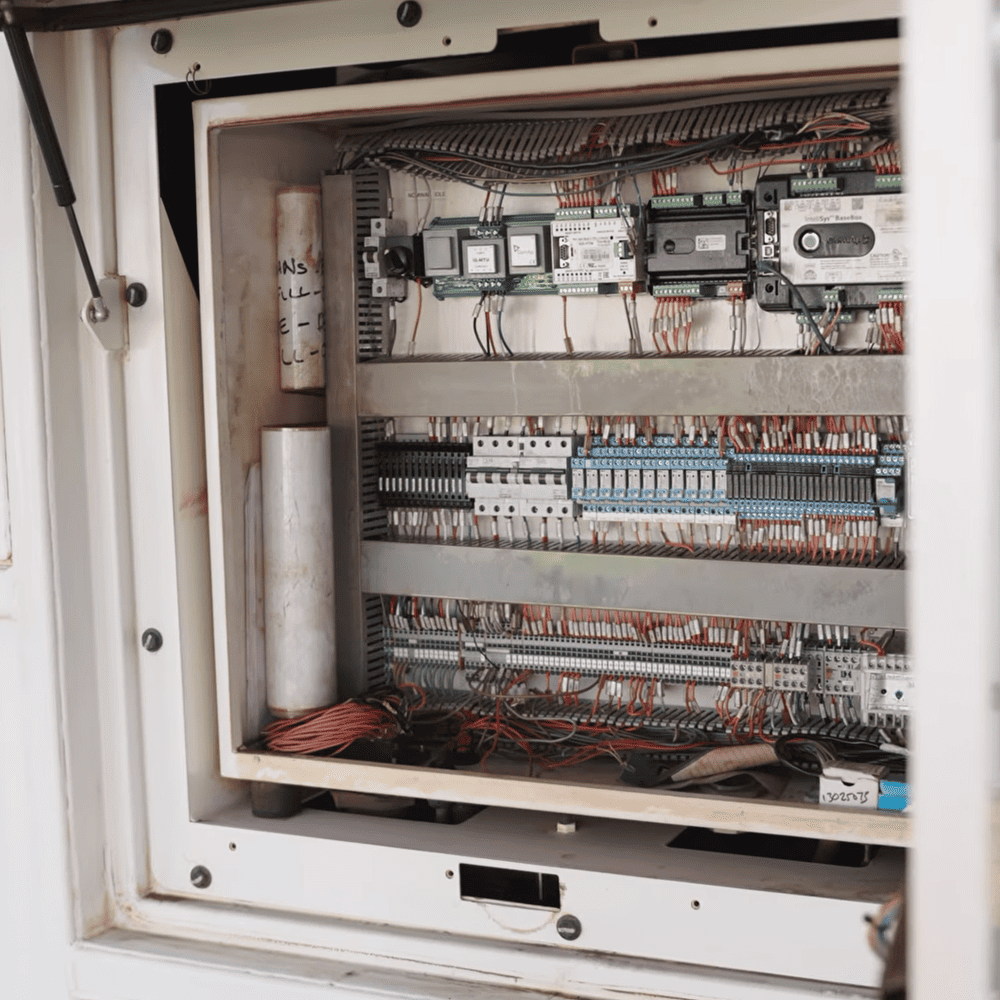
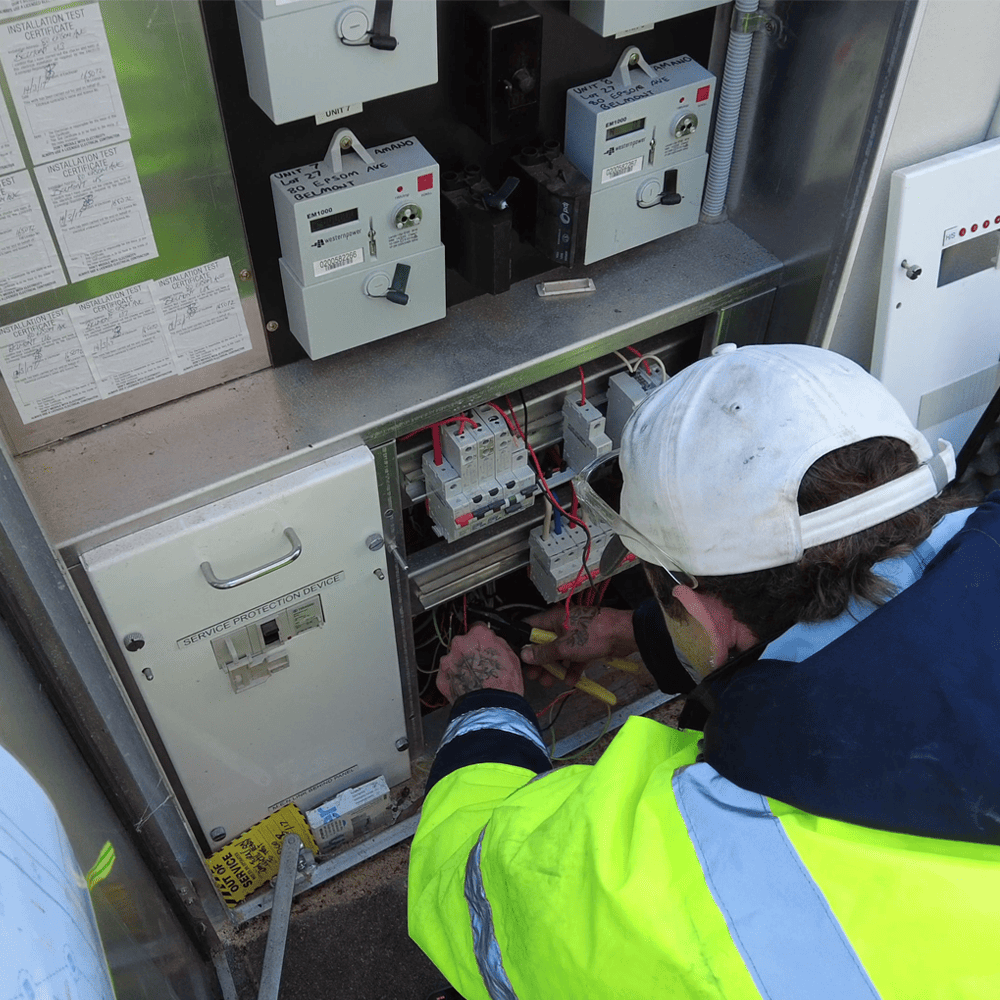
Switching gear should be functionally tested at every service, because one failed timer or sensor can take out a whole level. That covers time clocks, PE cells, contactors and motion sensors. A contractor who swaps globes and never opens the switchboard is skipping the place where the expensive faults live.
What the log should record:
Time clock settings, checked against the actual time and corrected if they’ve drifted
PE cell operation, tested by covering the sensor and confirming the lights respond
Contactor condition, including buzzing, pitted contacts or heat discolouration
Motion sensor response, sensitivity and hold-on time
Circuit breaker condition on lighting circuits, plus RCD trip tests where RCDs are fitted
There’s a WA-specific quirk worth checking. Many digital and astronomical time clocks include a daylight saving setting that’s easy to leave switched on. WA dropped daylight saving after the 2009 referendum, so a carelessly programmed clock can sit an hour out for half the year.
The cost of ignoring controls adds up quietly. A hypothetical open-deck car park with 60 fittings at 40 watts shows how fast.
If a PE cell fails in the “on” position, running an extra 12 hours a day burns roughly 10,500 kWh a year. At around 29 cents per kWh, that’s close to $3,000 annually for lighting nobody needed. Tariffs vary, but the order of magnitude holds.
Emergency Lighting Needs Its Own Records
Emergency and exit lighting needs its own records because AS/NZS 2293.2 sets a separate testing regime and record-keeping requirements. That regime includes six-monthly 90-minute discharge tests and a more thorough annual inspection. Many sites also run a quick monthly visual check between services.
Where one contractor handles general and emergency lighting, the two records should cross-reference each other. Failed batteries and dead exit signs should appear in both, flagged as safety items.
Councils sometimes assume the general lighting electrician covers emergency fittings by default. That assumption often turns out wrong. The gap usually surfaces when a building surveyor or fire contractor asks for the log book and nobody can find a current one.
How Faults Should Be Written Up
A fault entry should let someone who wasn’t on site understand the problem and its current status. “Fault found and rectified” simply doesn’t cut it. Councils approve repair quotes based on these notes, so vague wording makes it hard to tell a genuine fault from padding.
Patterns matter more than one-off faults. Three LED drivers failing on the same level within six months usually points to a deeper cause. Common culprits include a dodgy batch, a voltage issue or heat build-up in enclosed fittings. A contractor who spots and reports the pattern saves the council paying for the same repair repeatedly.
Photos and Job Notes That Back It Up
Photos are the simplest way for a council to verify work it didn’t witness. Decent contractors take them out of habit, because they protect the electrician as much as the strata company. Most operators reckon a before-and-after pair for each repair is the bare minimum.
Photos worth expecting in every report:
The faulty fitting or component before work starts
The completed repair, with the fitting lit
Time clock and switchboard settings after any adjustment
Vehicle or vandal damage, which helps with insurance or recovering costs from a responsible owner
Any hazard left in place, such as wiring that’s been isolated pending a quote
Job notes should be written in plain English. If the council treasurer can’t follow them, they’ve failed at their one job.
Records That Are Easy to File
Service records should arrive in a format the strata manager can file in minutes and find again years later. A PDF report per visit, named consistently by date and site, beats a handwritten docket shoved in an envelope. Most established electrical contractors now run job management software that makes this routine.
Each report should show the visit date, the technician’s name and licence number, the site address and the scope of work. A running summary of open faults at the top saves the manager trawling through old reports to see what’s outstanding.
Consistency between visits is the real test. A council should be able to line up four quarterly reports and see each fitting’s history at a glance.
Recommendations for Future Work
A good service log finishes with forward-looking recommendations, ranked by urgency, that help the council budget ahead. This is the section that shows how well a contractor actually knows the building. WA strata companies with 10 or more lots, and smaller schemes above a set replacement-value threshold, need a 10-year plan. The plan covers non-routine work, so retrofits and end-of-life replacements are the items that feed into it.
Recommendations worth seeing:
Urgent safety items flagged for immediate approval
Fittings nearing end of life, with an estimated replacement window
LED retrofits for any remaining fluorescent battens
Controls upgrades, like motion sensors that dim basement lighting to a low standby level when the car park’s empty
Vandal-resistant (IK-rated) or higher IP-rated fittings in spots that keep copping a hammering from vehicles or water
Frequently Asked Questions
How Often Should Strata Car Park Lighting Be Serviced?
Most WA strata car parks suit a quarterly inspection of general lighting and controls. Emergency and exit lighting runs on its own schedule under AS/NZS 2293.2, with six-monthly discharge tests and an annual inspection. High-traffic or vandal-prone sites often justify monthly walk-throughs of the general lighting too.
Who Should Own the Service Records?
The strata company should own the records, since they relate to common property it’s legally responsible for. Contractors can keep copies, but reports should be supplied after every visit. A council changing electricians shouldn’t have to ask for its own history.
Can a Council Member Check the Car Park Lights Themselves?
A council member can walk the car park and note dead or flickering lights, which helps between services. Pressing the test button on an RCD is a basic user check too. Instrument testing of RCDs and any repair to switchgear or fittings needs a licensed electrician in WA.
Key Takeaways
A car park lighting service log should let a strata council judge the electrician’s work without ever setting foot in the car park. If it can’t, the council’s carrying risk it doesn’t need to. Reliable commercial electric service for strata car parks shows up in the paperwork first. A tidy, detailed log usually means the work behind it is just as tidy.